How to repair a faucet that drips after it’s turned off

robinet qui coule

How to repair a faucet that drips after it’s turned off

Is there anything more annoying than a faucet that drips constantly? Besides the incessant noise this little leak makes, it can end up wasting between 140 and 680 liters of water every day! Suffice it to say that the ecological and financial consequences—especially in the case of hot water—can be significant.

Nevertheless, whether for fear of the difficulty of taking care of the problem ourselves or for fear of the bill for having someone else do it, many of us just let it go. While we can easily correct certain problems, there are others that may require a professional service call. In either case, resolving them will no doubt be beneficial not only for your state of mind but also for your wallet!

What factors are most often at the root of a leaky faucet? And how can it be repaired?

The principal causes: cartridges, washers and scale buildup

Every kind of faucet has its own kind of problem. Mixer taps (with two knobs, one for cold water and one for hot water) and single-lever taps (in which one lever controls both the temperature and the flow) are the two most popular types of faucets in the majority of homes in Quebec.

Mixer taps frequently fall victim to a worn cartridge, which is the part located underneath the mechanism that turns on the water. To replace it, all you have to do is dismantle the faucet. Simple, right? And to make sure that you replace the cartridge with the correct model, just take the old one with you to the hardware store and you’re good to go!

As for single-lever taps, it’s often the washers that give up the ghost. Just like with the cartridge, a simple replacement will do the trick. In some cases, you may have to remove the mineral deposits from the aerator. To do this, unscrew the head of the faucet, remove the screen and submerge it in white vinegar. As far as that goes, there’s nothing preventing you from regularly descaling the head, as the buildup of hard water deposits can be the source of many leaks.

Quality and professionals: your guarantee for reliable faucets

Whenever you purchase a faucet assembly, you should always keep the installation instructions. Yet they’re often the first thing that gets thrown away once the faucet’s assembled! Without the tips and precautions they contain, how can you prevent a leaky faucet? And how can you avoid having to worry about it all the time? By opting for quality. The price may make you think twice before buying a more expensive faucet, but it will prove to be more cost effective in the long run.

For example, in the case of mixer taps, did you know that the cartridges in most high-end models come with a lifetime guarantee? What’s more, if you go directly to a plumber or a plumbing store to get your parts, they’ll most likely have them in stock. The investment makes much more sense when you consider that you won’t have to pay shipping or other surcharges.

Quality, ease and peace of mind: that’s what the team at Plomberie Roger Chayer Inc. has been offering clients in Montreal and the surrounding areas for more than 70 years. Their full range of services, along with their partnership with Énergir and their CMMTQ (Corporation of Master Pipe Mechanics of Quebec) membership, are your guarantee of reliability and trustworthiness. That’s enough to encourage you to contact them to repair your leaky faucet, don’t you think?

Sources :
Canal Vie. Quand le robinet fuit (When the faucet leaks). 2020.
Le Monde. Robinet qui goutte : causes, conséquences, réparation (Leaky faucet: causes, consequences, repairs).

Do outdoor faucets require frost protection?

robinet extérieur gelé

Do outdoor faucets require frost protection?

Like it or not, fall is here, and with it, a certain number of precautions to think about in preparation for the cold days ahead. Among these precautions is protecting your outdoor faucets.

The pipes and spigots are particularly vulnerable to damage caused by freezing. However, whether because winter comes early or our lives are too hectic, we often forget to check them and winterize them. The consequences? The water contained in the pipes and spigots can freeze and expand, causing them to burst. Now, if there’s one thing we don’t want, it’s repairing a frozen pipe or dealing with a flood in twenty-below-zero temperatures! Especially since anything that’s subjected to this ordeal can quickly end up damaged, as well.

So should you frost-proof your outdoor faucets?
The answer is obvious!

Winterizing your outdoor faucets

While a frost-proof faucet is a very appropriate solution for winter, don’t underestimate the value of the following good practices when it comes to helping you avoid unpleasant surprises.

First of all, purge the lines. The process couldn’t be easier. Start by closing the drain valve if you have one. Next, turn on the outdoor faucet and let all of the water drain out of the pipes. Last, turn it off and leave it off until the weather warms up again. As for the hoses, put them away in a dry place that’s sheltered from the freezing cold.

Certain materials such as glass wool and polyethylene foam can be used as an affordable means of insulating your pipes. However, you’ll need to check them every so often to make sure everything stays in place.

Frost protection: an indispensable precaution for your outdoor faucets

Most recently constructed homes are equipped with frost-proof outdoor faucets. If you don’t have them, they’re well worth the expense!

These faucets have an internal mechanism that automatically purges the line after each use. This helps keep your pipes safe from frost and damage. If you want to, you can even use your frost-proof outdoor faucet during the cold weather at no risk. However, remember that your garden hoses will still need to be disconnected and put away during the cold season.

For optimum performance, a frost-proof faucet should be connected to a pipe that’s buried between 50 and 60 centimeters (19 to 23 inches) under the ground and it should be gently inclined toward the outside to ensure that the automatic purge system works correctly and to prevent rainwater from seeping in.

If you need help or advice to frost-proof your outdoor faucets or winterize your systems, you’ll be happy to know that the team of experts at Plomberie Roger Chayer Inc. is at your service. Whether you need to insulate your indoor or outdoor pipes or you need any other kind of plumbing work done, they’ll meet—if not exceed—your expectations.

Should you choose hot water or electricity for your underfloor heating?

plancher chauffant électrique ou à l'eau chaude

Should you choose hot water or electricity for your underfloor heating?

Are you renovating or building a home and wondering which type of heating system to choose? Are you tired of having cold feet (literally) during the winter? If you’d like your heating system to provide you with the continuous comfort of gentle, uniform warmth throughout your home, you should opt for underfloor heating. This floor heating system is cost effective, efficient and quiet. And it doesn’t blow any air (or dust) around your home. What’s more, it allows your floor to dry in minutes.

There are two main types of radiant floor heating systems currently on the market: electric and hot water (also known as hydronic). Each system offers its own unique advantages.

To help you decide which type of underfloor heating is best for you, here are the main characteristics of each one.

installation de plancher chauffant électrique

Electric underfloor heating

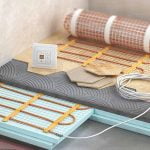
Electric underfloor heating is the most popular choice. This system works through a network of heating wire (installed on fiberglass mesh) or heating cables (for emitting infrared radiation), which are connected directly to a thermostat.

Even though it can be installed throughout the home, you should be aware that electric underfloor heating is ideal for small rooms, such as bathrooms, entryways and bedrooms.

Advantages

  • This type of underfloor heating system offers a lot of value for the price.
  • Installation is quick and simple; however, the electrical connections must be done by a professional.
  • If your concrete slab is already in place, you can simply install the system directly on top of the concrete and then install the flooring on top of the system.
  • It is directly powered through the electrical connection.
  • Heating systems of this kind don’t require a mechanical room.
  • This type of flooring is maintenance-free.
  • The room-by-room thermostat system is less expensive than the one used for hot water underfloor heating.

plancher chauffant hydronique (à l'eau chaude)Hot water underfloor heating

The hydronic or hot water underfloor heating system consists of a series of pipes and pumps installed underneath the concrete slab. The hot water, which has been heated either by a heat pump or a boiler, circulates through the pipes under the floorboards, heating the floor and the room. Therefore, this type of heating system requires a mechanical room, as well as rigorous maintenance.

Hydronic radiant floor heating can’t be installed in a single room. In fact, it wouldn’t really be advantageous to do so. It must cover at least a full storey or the entire basement of the residence. It’s the ideal heating solution for homes under construction.

Advantages

  • This type of underfloor heating can be used in the summer and winter as a central heating system, regardless of the type of flooring.
  • This type of heating offers over 95 percent energy efficiency.
  • It’s an eco-friendly solution that has existed for many years, but has recently enjoyed renewed popularity.
  • This system enables greater cost savings on large surface areas than its electric counterpart does.
  • The cost is particularly advantageous when the system is installed in a residence under construction or during major renovations.
  • The heat it gives off makes your space truly comfortable with a consistent temperature from room to room.

Hot water or electric underfloor heating—conclusion

In the end, the best option will depend on your needs and the project. If you want to install radiant floor heating in just one room, opt for the electric system. On the other hand, if you want to install this type of heating in a large area (the whole house or the basement and a full storey), the ideal solution is hot water underfloor heating.

For the purchase and installation of an underfloor heating system in the Montreal area, you can count on the team of experts at Plomberie Roger Chayer.

What you need to know about bathroom plumbing installation

installation de plomberie de salle de bain

What you need to know about bathroom plumbing installation

Are you thinking about building or renovating a full bathroom in your home?

You should be aware that it’s a complex, multi-stage project that requires a lot of organization. In fact, to make a bathroom functional, a variety of plumbing work will need to be performed one job after another.

You’ll also have to consider numerous elements, including the layout, the heating system, the furnishings, the toilet and the permits, among others.

Here are a few fundamentals to help ensure that the installation of your bathroom plumbing goes off without a hitch.

Proper planning

It’s important to know what to expect when having your bathroom plumbing installed. All of the steps must be followed carefully and in the right order.

First, don’t hesitate to call on a professional plumber who can provide guidance and advice to ensure that the work on your dream bathroom is done correctly. A professional plumber also has liability insurance, as well as certification from the Corporation of Master Pipe Mechanics of Quebec (known by its French initials, CMMTQ), which will guarantee all of the work.

Second, you should draw up plans for the layout of your bathroom. Keep in mind that a bathroom should be welcoming and functional (consider the amount of storage, for example). It should also address your specific needs. Most importantly, it should be constructed using high-quality, durable materials and furnishings.

Third, don’t forget to obtain the necessary permits from your city. A construction permit is mandatory if you’re building a new bathroom. However, if you’re renovating an existing bathroom, you’ll need to check with your city to find out if an improvement permit is required.

Last, the work must be performed in a certain order. For example, the plumber should install the pipes before the electrician does the wiring.

The three stages of plumbing installation

Now that you’ve completed the preparations, the bathroom plumbing installation work can begin.

It will be carried out in three stages:

1. Installation of the plumbing infrastructure

The first thing the plumber will do is install the pipes that will be hidden inside the walls and under the floor. These supply lines and drain pipes will channel clean water to the faucets, bathtub, shower and toilet and channel wastewater to the sewer system.

2. Installation of the bases

The second thing the plumber will do is install the bathtub and the shower base. There are various models of shower bases. For example, they can be recessed, free-standing, tile-ready or raised. The type of shower base your plumber installs will depend on various factors, including the model of your shower (Italian, raised, etc.), the shape of your shower (round, rectangular, etc.) and the type of drain (vertical, horizontal, recessed, etc.).

3. Finishing work

The final step consists of installing the faucets and other plumbing fixtures on the sink, toilet, bathtub and shower. There are many different types of faucets (single-lever taps, mixer taps, thermostatic mixers, electronic mixers, etc.). When choosing your plumbing fixtures, you’ll also want to keep in mind that, these days, they’re a full-fledged decorative element that will define the style of your bathroom.

In order to stay on schedule…

Don’t forget that, in most cases, once you’re ready, you’ll need to let your plumber know three to five days before performing the final step.

For the full installation of all your bathroom plumbing, contact the team of experts at Plomberie Roger Chayer: (514) 590-0666.

How much does a plumber in Montreal charge and why?

tarif plombier à Montréal

How much does a plumber in Montreal charge and why?

The plumbing system is one of the main structural elements of your home. That’s why it’s very important to perform regular maintenance on it. Do you want to know the going hourly rates for plumbers so you can get an idea of how much this work might cost? Discover the various factors that can influence the hourly rate of a plumber in Montreal and find out what a fair price is.

Factors influencing a plumber’s hourly rate

The amount of the invoice for plumbing services will vary according to different criteria:

  • The location of your residence (travel expenses, competitor rates, etc.). For example, the hourly rates in Montreal are a little higher than on the South Shore or the North Shore.
  • The required number of plumbers. If several professionals are needed to perform the work, the price will naturally be higher.
  • The condition of your plumbing system. The older or more decrepit it is, the more expensive the bill will be.
  • The need for specialized equipment or materials. A high pressure pump truck, for example, will increase the bill.
  • The quality of the products the plumber uses. The better the quality, reliability and durability, the higher the cost will be.
  • The plumber’s experience and reputation.
  • The plumber’s areas of specialty (water heaters, heating, plumbing fixtures, pipes, etc.).
  • The availability of the plumber. The busier plumbers are, the more likely they are to raise their prices, as they always have plenty of work.
  • The moment when you need the plumber. If it’s an emergency or night-time service call, it will be more expensive, as the plumber will have to make schedule adjustments or postpone other appointments in order to come help you.

You should be aware that, regardless of how long it takes to do the job, the vast majority of plumbers will bill you for at least one hour of work.

Reasonable hourly rates for plumbers

Each year, the Corporation des Maîtres Mécaniciens en Tuyauterie du Québec (CMMTQ) recommends an hourly rate for plumbers. This should give you a good indication.


Here’s a table summarizing the reference prices for residential plumbing services in 2020.

CMMTQ standard hourly rates 2020Average hourly rateTravel expenses – usually 30 min. at the regular hourly rate
Montreal$104.71$95$47.50
Other parts of Quebec$104.71$85$42.50

The hourly rate recommended by the CMMTQ is a general guideline, which is adjusted each year (for example, it was $97.23 for the residential sector in 2019). Some plumbers will charge a higher rate, while others like Plomberie Roger Chayer will offer a rate that’s lower than the CMMTQ reference price.

Ask for an estimate on your plumbing work

Given the wide variation in prices for plumbing work, you should be well-informed before having the work done. Get an estimate from at least three different plumbers. Estimates by telephone or over the internet are free. However, if the plumber has to travel in order to give you an estimate, you may be charged a fee (which will normally be deducted from the final bill if you end up hiring that plumber). Compare the services offered taking the plumber’s expertise and experience, the quality of the products used and the available warranties and insurance into account. Don’t base your decision solely on price.

For your peace of mind, entrust the work to a professional plumber who’s a CMMTQ member and who holds a contractor’s license in plumbing.

You can rely on the team of certified experts at Plomberie Roger Chayer for all your plumbing needs in Montreal and the surrounding areas at a fair, competitive price.

Are there advantages to leasing a water heater?

location de chauffe-eau

Are there advantages to leasing a water heater?

A water heater has a lifecycle of somewhere between 10 and 15 years (around 12 years on average). If you notice that your hot water isn’t as warm as usual, has a yellowish tinge (indicating the presence of rust) or runs out quickly, these are signs that it’s time to repair or replace your water heater.

If you decide to replace your water heater, you have two options: leasing or purchasing. Each of these solutions presents certain advantages and disadvantages. To make an informed choice, there are various factors to take into consideration, depending on your particular situation.

Leasing a water heater

A number of companies, including Gaz Métro Plus, Norco and the most well-known one, HydroSolution, offer water heaters for lease.

The advantages

  • The cost per month ranges from $14 to $25. This includes installation, maintenance and repair work. In general, no deposit is required.
  • In the event of a problem, you have access to free 24/7 emergency repair services.
  • Once your water heater reaches the end of its lifecycle (a maximum of 15 years), a new one will be provided and installed at no extra charge. The companies will generally haul away your old water heater, as well.
  • Some lease agreements include an upgrade clause allowing you to change the size of your water heater.

The disadvantages

  • The long-term costs are high. For example, if you lease a water heater at $14 per month for 10 years, you’ll end up paying a total of $1,680.
  • There’s a limited choice of models, so you need to make sure you verify the energy efficiency of the proposed equipment.
  • Most lease agreements stipulate that the leasing company will not be held liable for any damage stemming from problems with the water heater.
  • Lease agreements contain numerous clauses related to maintenance frequency, repairs, emergency response times, etc., so you must pay careful attention to make sure you know what you’re committing to.

Purchasing a water heater

The advantages

  • This is the most economical solution in the long run. The price of a standard water heater, including installation, ranges from $500 to $1,000.
  • You have a vast selection of models to choose from with various options in terms of capacity and energy efficiency.
  • You have an ample choice of providers, from plumbers and major home improvement stores to specialized companies.
  • Some providers offer financing.
  • Financial aid is available when you exchange your natural gas or propane powered water heater for an energy-efficient model.

The disadvantages

  • There’s a fee for installation. Even if you install your water heater yourself, a certified plumber has to come and verify the installation.
  • You are responsible for maintenance and repair costs. However, you should be aware that typical water heater repairs are fairly inexpensive ($35 on average).
  • The warranty on parts and installation is for a limited time only, usually between 6 and 12 months.
  • A number of insurance companies refuse to cover damage caused by water heaters more than 10 years old.

Final thoughts on leasing vs purchasing a water heater

Leasing a water heater could be an advantageous solution for rental property owners who aren’t concerned with management and who will pass on the cost of the water heater lease to the tenant through the rent. Otherwise, purchasing a water heater will be your best option, as it’s more economical and won’t require you to enter into a contract with a service provider.

For the purchase and installation of a water heater in the Montreal area, you can count on the team of experts at Plomberie Roger Chayer.

Who’s supposed to pay the plumber? The tenant or the landlord?

payer le plombier: locataire ou propriétaire

Who’s supposed to pay the plumber? The tenant or the landlord?

Does the toilet in your apartment get backed up often? Is the washbasin drain clogged? Do you know the situations in which the landlord has to pay the plumber? Even though you don’t own your apartment, it’s your responsibility to take care of minor repairs, such as replacing seals and screws, at your own expense. However, when it comes to problems caused by plumbing malfunctions (like stopped up toilets or clogged sinks), the landlord is the one responsible for paying the fees. In fact, the landlord is obligated to pay for general maintenance on the apartment, including the inevitable repairs that become necessary as a result of normal wear and tear.

But be careful! If the damage is the result of negligence on your part as the tenant, the costs will be passed on to you. This would be the case, for example, if a pipe leaks or becomes clogged as a result of work you performed on it, yourself. You should be aware that any repair or maintenance work that is performed on a rental unit must always be approved beforehand by the landlord.

What are your responsibilities as a tenant?

As a tenant, you’re obligated to maintain the apartment in good condition. This includes the plumbing system! According to the Civil Code of Quebec, the obligations of the tenant toward the landlord include the following:

  • To use the property with prudence and diligence (CCQ Article 1855)
  • To make necessary repairs to the leased property in certain cases (CCQ Article 1864)
  • To allow urgent and necessary repairs to be made (CCQ Article 1865)
  • To inform the lessor of any serious defect or deterioration (CCQ Article 1866)

Under what circumstances does the landlord have to pay the plumber?

The landlord must assume responsibility for any repairs that are essential or urgent, unless the damage was caused by negligence on the part of the tenant. Urgent repairs include significant damage (e.g. a serious leak in the plumbing) that prevents the apartment from being used or maintained as it should.

Here are a few examples of situations in which the landlord must pay the plumber:

  • When the damage occurs after the lease agreement has been signed, but is the result of improper maintenance on the part of the landlord
  • When the damage is the result of faulty construction or a natural disaster
  • When the damage is caused by the breakdown of the plumbing system (the landlord is responsible for the cost, as it’s the landlord’s duty to ensure that the apartment for rent is in compliance with current regulations)
  • When the plumbing problem existed before the lease was signed, but wasn’t discovered by the tenant until afterwards

What to do in the event of a lawsuit

Do you have a problem with your water pressure or your water heater and your landlord is refusing to assume the cost of the repairs? Don’t risk withholding your rent payment hoping to pressure your landlord, as you’ll be breaking the law by doing so. The best recourse is to build a solid case with all of the necessary proof that the damage wasn’t caused through any fault of your own.

Should the tenant or the landlord call the plumber?

Since the plumber generally needs the landlord’s authorization to perform the work, it’s recommended that the landlord should be the one to call the plumber. Obviously, in the case of urgent repairs, the tenant may call the plumber, but the plumber must be given the landlord’s contact information.

Experienced plumber in Montreal

Are you looking for a competent plumber to unclog your pipes, perform preventive maintenance on your plumbing system or perform any type of repairs? The team of experts at Plomberie Roger Chayer has been offering quick, courteous service for more than 70 years. We also provide 24-hour emergency service. Contact us for a free estimate!

Choosing a hot water heating system

Un système de plomberie installé à Montréal

Choosing a hot water heating system

Whether you’re doing major renovations, changing residences or trying to reduce your electricity bills, it’s important to choose your heating system carefully. It really is possible to find an efficient system that offers maximum comfort at a reasonable price! But what criteria should you employ to ensure that you make the right choice?

Hot water heating: a system that meets your needs

Central hot water heating systems only appeared shortly after the thirties. That explains why most heating systems of this type are found in older homes, some nearly a hundred years old.

These days, few people are opting for hot water heating in their new homes, largely because of the elevated cost of this type of system. However, the latest models offer improved energy efficiency, upwards of 90 percent. Hot water heating systems offer numerous advantages that you’re going to love for years to come.

The benefits of a hot water heating system

Comfortable, economical and healthy (both for you and for the environment), hot water heating offers a stable temperature; the water circulating through the radiators and steel ducts never reaches the point where it will burn your fingers if you touch them (yet it remains hot for a long time!). Furthermore, since this type of heating doesn’t move the air like a forced-air system does, there are fewer particles, contaminants and other allergens circulating through the home.

For instance, cast-iron radiators diffuse part of their heat via convection (as well as radiation). As a result, they heat the objects in the room rather than the ambient air. The larger the radiator, the more radiant heat it will produce. Some people even compare the heat produced by these radiators to the warmth of sunlight!

Types of hot water heating systems and which one to choose

To circulate the water, there are two types of hot water systems: gravity-fed systems and forced circulation systems.

Gravity-fed systems

Without the need of a pump, these systems function because of the difference in density between the feed water and the return water. The water circulates naturally, and the heat is distributed uniformly throughout the home.

However, gravity-fed systems are gradually losing ground to forced circulation systems, as the former type offers lower energy efficiency because of the significant fluctuations in temperature that can lead to slow water circulation.

Forced circulation systems

This is currently the most commonly used type of hot water heating. Driven by a system of pumps, the circulated water can generate up to 1.5 MW of thermal power (for residential buildings).

Among the most popular forced hot water systems, you’ll find the closed loop system (low installation costs), single duct system, and two-pipe system (direct return or reverse return).

To stay warm this winter, seek the advice of a specialist!

Are you thinking about replacing your current heating equipment with a hot water heating system? Plomberie Roger Chayer inc. will give you all the valuable advice you need to make the best choice, given your particular situation!

References: 

http://plus.lapresse.ca/screens/16853dba-1d32-406a-a8ed-8e3bdd478ff8__7C___0.html

https://www.ecohabitation.com/guides/2536/les-systemes-de-distribution-de-chaleur-a-eau-chaude/

No hot water? It’s a water heater problem!

probleme-de-chauffe-eau-plomberie-roger-chayer

No hot water? It’s a water heater problem!

You’re just about to draw a nice hot bath when you notice that there’s no hot water! It’s an aggravating problem for those of us who are so used to having hot water that we take it for granted. But where there’s a problem, there’s a solution. And in this case, the solution resides in the hot water heater.

The most common water heater problems

The lack of hot water in your home may be the result of various technical or electrical problems. Unfortunately, despite the fact that your hard-working hot water heater serves you faithfully, it isn’t infallible!

Whether you have an electric or gas water heater, here are a few potential solutions to the most common problems.

Pas une goutte d’eau chaude?

If your water is icy and you have a gas water heater, check to see if the pilot light has gone out. You may have to clean the burner or even replace the thermocouple, if necessary. If your water heater is electric, make sure that the thermostat isn’t broken. If it is, you’ll need to call a plumber to replace it..

You only have a little bit of hot water

If your water is hot, but there isn’t enough of it, you can check several different things. Generally, you can attribute a reduced quantity of hot water to the following:

  • Excessive use of hot water—if you have a large family and you have to fight over the hot water, perhaps there simply isn’t enough to go around!
  • A leak in the plumbing system—check all of the faucets in the bathrooms and kitchen.
  • Improper thermostat setting—the temperature should be set above 49° C (120° F).
  • Dirty equipment—if you have a gas water heater, the burner may be obstructed and due for a good cleaning.
  • A broken heating element—if you have an electric water heater, you may need to replace the heating element.

No hot water: other possible causes

Various other things that can cause your water heater to malfunction (and diminish your quality of life!) include the following:

  • Electrical problems—the voltage may be too high, the wires may not be firmly connected or there may be a short circuit somewhere.
  • Fuses that often burn out—there may be rusted contacts, the wires may not be firmly connected or the power supply wiring may be insufficient for your needs.
  • A dripping discharge valve—if the valve is simply open, you can shut if off yourself. However, if it’s broken, you’ll need to call an expert.
  • A dripping pressure relief valve—there are several things you’ll need to inspect carefully. If it’s leaking, it may be improperly attached or broken, the thermostat may be deficient, there may be excessive water pressure or there may be thermal expansion in the water system.

Regain your usual comfort with the help of our qualified plumbers!

Are you experiencing problems with your water heater? Call on the experts at Plomberie Roger Chayer to perform the necessary maintenance and repairs on your plumbing system! Contact us for a free estimate!

How to install a dishwasher

Installation lave-vaisselle - Plomberie Roger Chayer

How to install a dishwasher

In the vast majority of homes, a dishwasher is an essential part of the furnishings. However, when it comes to installation, a dishwasher requires a little more attention than other household appliances.
In some cases, it may be necessary to call on the services of a plumber. In any event, correct, methodical installation will guarantee that the dishwasher functions well for many years to come.

Setting the stage for a successful installation

Dishwashers are most often built in underneath the kitchen counter in a space set aside for that purpose. If there is no reserved space, you should know that a standard dishwasher is 35 inches high, 24 inches wide and 24 inches deep. There also needs to be extra space behind it for pipes, insulation and adjustments (which you’ll make by screwing or unscrewing the legs to ensure that the dishwasher sits level).

You may also want to place an anti-vibration pad underneath the dishwasher, depending on the evenness and composition of the flooring. Obviously, you shouldn’t install the dishwasher until you have successfully completed all of the preliminary steps.

Please note that, if the dishwasher is far removed from the water supply lines and drainpipes, you may require the services of a plumber and an electrician.

Another tip: if you are replacing an existing appliance, it’s always best to use new pipes and connectors, even if the old ones appear to be in perfectly good condition. Make sure you have the proper tools on hand, including a multi-bit screwdriver, a nut driver, a level, a socket wrench, pliers, a pipe cutter, a wrench, a tape measure, a drill and a bucket.

The three essential steps

The actual installation of the dishwasher consists of three steps:

1- Connecting the water supply

2- Connecting the drainpipe

3- Connecting the electricity

The parts you need to make these connections won’t necessarily be included in the package with the appliance. You may need screws, hose clamps, a drain hose, molding, caps, Teflon tape, a hot water supply line, connectors, etc.

The dishwasher must be connected to the hot water. If there’s a nearby supply valve, hooking it up is easy. All you have to do is connect the end of the flexible hose to it.

First, insert a seal ring and then tighten securely. Open the valve to make sure the connection is good. It’s recommendable to coat the threads of the water supply line with silicone grease or to wrap them with Teflon tape. If there is no nearby water supply valve, you can use a saddle valve or you can cut the pipes and make the connections.

In either case, it’s preferable to entrust the job to a plumber.

Connecting the drainpipe is generally simple. Attach the dishwasher drain hose to the drainpipe, specifically to the lateral inlet of the existing PVC backflow preventer. Use a hose clamp to prevent any leaks. If there is no existing connection, once again, it’s best to call on the services of a plumber.

The electrical connections for the dishwasher must be properly grounded and include a circuit breaker. The wiring must be connected to the back of the dishwasher junction box using a strain-relief cable clamp. Distinguish the dishwasher’s three wires (white, black and green) with the ends stripped.

Use standard wire nuts of the correct width to join the wires of the dishwasher to the residential wiring (white to white, black to black and green to the ground wire). Replace the cover on the junction box. Avoid using an extension cord.

The pros at Plomberie Roger Chayer are very familiar with all kinds of installations, whether old, new or unusual. So to ensure your peace of mind, call on our services